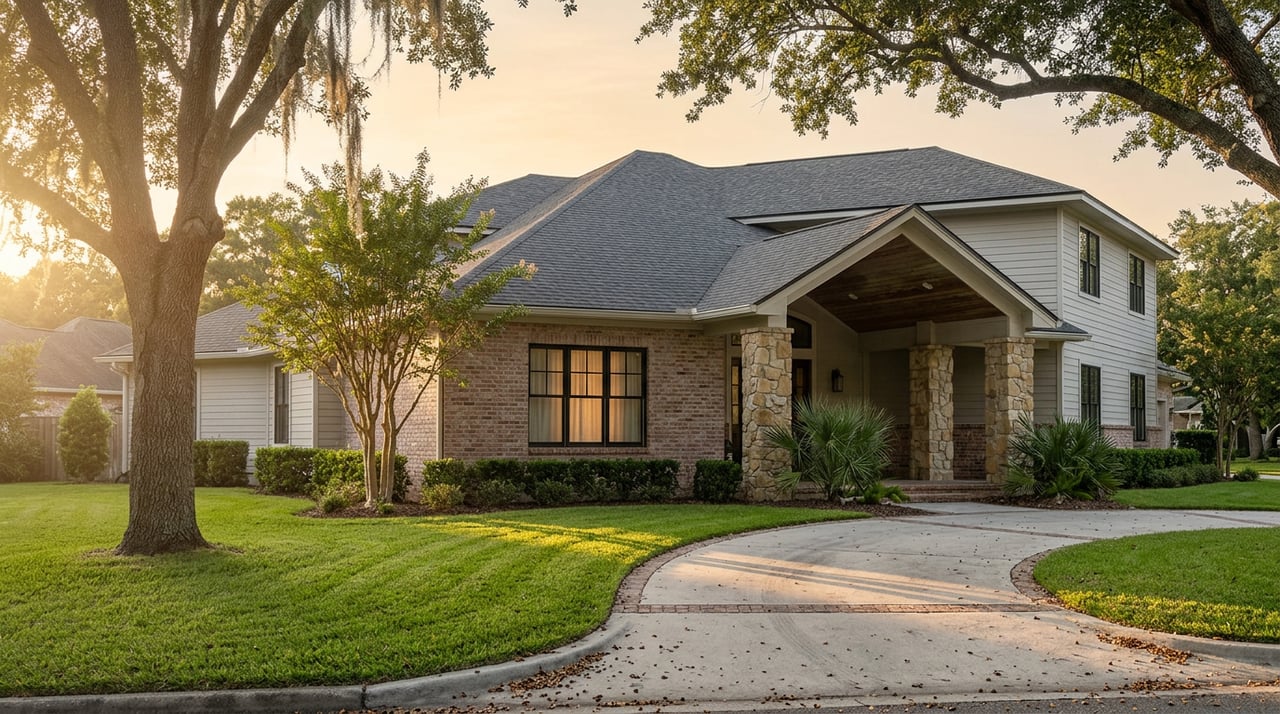
Southwood's Weekends Found a New Rhythm This Fall
Walk Merchants Row Boulevard on the wrong Sunday this fall and the parking lot outside the Town Center looks half asleep. No tents, no folding tables of cut flowers and cured honey, no coordinator waving cars toward the grass overflow lot. Three Sundays a month, Southwood's Street Market simply isn't there anymore. That's not neglect. It's a schedule change that quietly reset how the whole neighborhood spends its weekends, and once you notice it, you start noticing it everywhere else too, from the golf clubhouse calendar to the line at SouthWood Sweets on a Friday night.
For years, the Southwood Street Market ran on the second and fourth Sunday of every month, a familiar biweekly rhythm that made it feel more like a grocery run than an occasion. That changed earlier this year. Market coordinator Amanda Johnson told WCTV in late March that the event would move to the last Sunday of each month going forward, a single monthly date instead of two. Resident Emily Abellera, who attended that first market under the new schedule with her husband Richmond, put the reasoning in plain terms: supporting local vendors matters more right now given the economy, and consolidating the market gave more than 35 vendors one bigger date to build around instead of splitting attention across two smaller ones.
Do the math and the shift is obvious. Twenty-four market Sundays a year became twelve. That's not a small trim. It's half the calendar, and it changes what the market means to the people who show up. When an event happens every other week, you catch it if your schedule allows. When it happens once a month, you plan around it, the way you'd plan around a farmers' market three towns over or a seasonal festival. The last Sunday of August 2026 still followed the new pattern, which tells you this isn't a temporary experiment. It's how the market works now, and Southwood's Saturday-into-Sunday flow has adjusted accordingly.
If the market only shows up once a month, something has to carry the other three Sundays, and in Southwood that job falls to the same three storefronts that were already doing the daily work before the schedule ever changed.
Canopy Road Café opens for breakfast and lunch with a patio built for lingering, and its menu leans into specifics rather than generic diner fare: the Surfer Girl omelet stuffed with spinach and avocado, the Funky Monkey pancakes finished with chocolate sauce and banana. It's the kind of place that turns a Sunday morning without a market into a Sunday morning with a table outside anyway.
El Jalisco Southwood picks up the other end of the day. The restaurant's large outdoor seating area and a kids' play zone in back make it a default choice for families who'd otherwise have driven off Merchants Row for dinner, and the complimentary chips and salsa on arrival keep it feeling like a neighborhood spot rather than a chain.
And when the meal is done, SouthWood Sweets is the walk-off. The shop, opened by the Rosier family, built its identity on stocking cakes and cupcakes from Southside baker Jennifer Young of TC Bakery alongside more than a dozen hand-dipped ice cream flavors, plus dairy-free and vegan options for anyone who needs them. It's open afternoons into evening seven days a week, which means the ice cream run doesn't require a market Sunday to happen. It just requires a reason, and a Southwood family rarely needs much of one.
Together these three anchor a version of the neighborhood that doesn't depend on the market at all. The market used to be one of many biweekly reasons to be out. Now it's the exception date, and the daily storefronts are the rule.
Here's the part a lot of residents still get wrong: the SouthWood Golf Club restaurant is open to the public, no membership required, and it's built for more than nineteenth-hole beers.
The clubhouse itself is a 7,200-square-foot low-country-style building designed alongside the golf course by Fred Couples and architect Gene Bates, with a wraparound porch overlooking the 9th and 18th greens. Inside, the dining room seats 100 people under vaulted ceilings, anchored by a cherry-and-granite fireplace, and the social calendar runs well past tee times. Bands, bingo nights, and dueling pianos have all drawn locals to the clubhouse on evenings that have nothing to do with golf.
That matters more once the market drops to one Sunday a month. Fall evenings get shorter, the porch stops feeling like a summer-only space, and the clubhouse becomes one of the few places in the neighborhood built to hold a crowd on a Friday or Saturday night without anyone needing a handicap index. It's easy to drive past it for years thinking of it purely as the golf course. The dining room and the fireplace suggest the club always meant it to be something else too.
Southwood's green space rarely gets its due in the summer heat, but the neighborhood sits inside more than 1,000 acres of parks, lakes, and preserved land, including four distinct habitat preserves threaded with walking and biking trails. Central Park and its 123-acre lake sit at the center of it, shaded by live oaks draped in Spanish moss that make the whole loop feel cooler than the thermometer suggests once October rolls around.
As the heat breaks, that acreage stops being scenery and starts being function. A pre-dinner walk around the lake before a table at El Jalisco, a bike ride through a preserve before ice cream at SouthWood Sweets, a stroll to the clubhouse porch instead of a drive. The trails don't compete with the Town Center or the golf club. They're the connective tissue between them, and fall is the season they finally get used that way.
Add it up and the picture isn't a neighborhood that lost an event. It's a neighborhood that traded a spread-thin biweekly habit for a smaller number of anchors that each carry more weight: one market Sunday a month instead of two, a clubhouse dining room and porch that fills the gap on other nights, three storefronts on Merchants Row doing daily duty, and a trail system that finally makes sense to use once summer lets go. That's a different rhythm than Southwood had two years ago, even though nothing about the neighborhood's footprint changed. The calendar just got more deliberate.
If you already live here, none of this requires you to do anything differently. It's just useful to know why the market lot looks empty three Sundays out of four, and why the golf club parking lot fills up on nights that have nothing to do with golf.
Damian Costantino and The Costantino Group work this corridor of Tallahassee closely enough to notice when a neighborhood's rhythm shifts, not just when its home prices do. If you're curious about Southwood, whether you're already settled here or just keeping an eye on it, Let's Connect.

Understanding your rights and responsibilities under federal and state fair housing laws to ensure equal opportunity in real estate transactions.

Selling
Maximize your home's value with these three essential tips for a successful appraisal process.
Buying
Navigate the home buying process with confidence using this essential checklist for defining your budget, must-haves, and ideal location.

Real Estate
Understand the key factors like interest rates and economic trends that signal the perfect time to buy or sell your home.
For Damian, success isn't measured by simply getting a property sold or reaching the closing table. It's measured by whether his clients feel they were well represented, well informed, and confident they made the right decision. Considering buying or selling in Tallahassee or the surrounding area? Contact Damian Costantino and put 16 years of experience and more than $250 million in career sales to work for you.

Damian Costantino
1520 KILLEARN CENTER BLVD TALLAHASSEE, FL 32309